|
|
Gamestudio/A8
SPECIFICATIONS 1 2 3 |
The A8 Engine
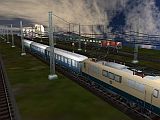
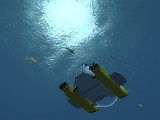
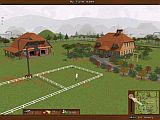
 The engine is the core of the development system - it determines the rendering of 3D objects or virtual worlds. Gamestudio's A8 engine is one of the fastest and most robust engines available. Its Adaptive Binary Tree scene manager switches seamlessly from indoor to outdoor sceneries and supports up to 200,000 objects per scene. The light manager generates an unlimited number of static and dynamic shadow-throwing light sources. Programmers can add new engine functions with the included Source Development Kit. The simple and straigthforward C-style API allows painless access to the engine from external development systems under C++, C#, or Delphi.
The A8 engine is designed to support a wide range of hardware
and software. Gamestudio applications run fast and stable even
on old PCs, without requiring the end user to update the 3D
hardware or DirectX version.
Rendering engine 
 |
Adaptive Binary Tree (ABT) scene manager, up to 200,000 entities per scene |
|
Binary Space Partitioning (BSP) / Potential Visibility Set (PVS) / Render Portals (Pro Edition) |
|
Indoor and outdoor support, seamless LOD terrain renderer |
|
Light manager for unlimited point and spot light sources |
|
Static and dynamic shadow mapping, decal, stencil, and PSSM shadows |
|
Fog areas, Camera portals, reflections and mirrors |
|
Geometric LOD, detail textures, texture compression |
|
Softskin models with multiple shaders; bones, vertex, and morph animation |
|
Animated sprites and decals |
|
Material properties for static and dynamic objects |
|
Multiple cameras and render views, multiple monitors, widescreen support |
PARTICLE & EFFECT Engine
|
Programmable particle generators for multiple particle types |
|
Beam generators for laser beams and tracer paths |
|
Pre- and postprocessing shaders, supporting shader models 1.0, 2.0, 3.0 |
|
HLSL and FX file support; real time shader editing; multiple shader stages |
|
Per pixel lighting, bump and environment mapping, multitexturing |
|
Layered sky system with sky cubes, sky domes, clouds and backdrop bitmaps |
|
Dynamic decal system for bullet holes, foot prints, tire marks etc. |
|
Programmable effects like lens flares, distortion, fisheye, etc. |
|
More than 40 included shaders: cartoon, environment, gooch, bump, lambert, blinn, phong, parallax, occlusion, wind animation, mirror, water, blur, bloom, dilate, displacement, erode, bleach, sepia, emboss, posterize, lens, PSSM, HDR, and many more |
|
Source code for all effects; shader workshop and shader viewer |
Physics & Collision Engine
|
Two polygonal collision detection systems with and without physics |
|
Physics objects with gravity, damping, elasticity, friction |
|
Highly realistic raycast vehicle simulation with easy-to-use template |
|
Hinge, ball, wheel, and slider joints, configurable universal joint |
|
Bezier path tracking for camera, actors or vehicles; path finding |
|
Mouse picking and manipulating of 3D objects |
|
Slow motion / quick motion effect |
2D Engine
|
Multi-layer system |
|
Animated 3D and 2D sprites, 2D particles, 2D shaders |
|
Movie player for rendering videos fullscreen and on textures |
|
GUI panels with button, slider, display and window types |
|
Truetype and bitmap fonts |
|
Screenshot generator |
Sound Engine
|
Static and dynamic 3D sound sources with Doppler effect |
|
Multichannel streaming sound player |
|
WAV, OGG, MID, MP3, WMA, CD support |
Network & Game Engine
|
Save / Load system for resuming games at arbitrary positions |
|
Easy, tranparent client/server mode for LAN and Internet (UDP) |
|
Multizone/multiserver support, MMOG capable (Pro Edition) |
|
FTP and HTTP access to servers and databases (Pro Edition) |
|
Input devices: Mouse, Keyboard, Joystick / Racewheel, SpaceNavigator®, WiiMote® |
|
Control external I/O and relay modules over the network  |
|
Expandable through DLL plugins |
On our website you'll find free plugins and extensions that were written by users and add new features to the engine, like Flash animation, database integration, force feedback, or further input devices.
The lite-C Programming Language
Gamestudio's lite-C language allows application programming from a beginner's to a professional level. Lite-C scripts can be attached to any object of the virtual world and react on events like being hit, touched with the mouse, coming close to something and so on.
Lite-C is a lightweight version of C/C++, the language used for commercial games programming. But unlike C++, it's extremely easy to learn and the best way to get introduced into 'real' programming. Anything that's scary to a beginner, like memory and pointer handling, is automatically managed in lite-C.
Still, lite-C is not a script language but a real programming language. It can access all functions from Windows libraries on your PC, including DirectX classes and OpenGL functions. You could write your own 3D engine in lite-C! Unlike many scripting languages like Basic, Python, LUA etc, lite-C is compiled - translated into optimized machine code. Thus a lite-C program runs up to twenty times faster than interpreted scripting languages. This is important as in an abitious game with several thousand actors, 10,000 program functions could run at the same time!
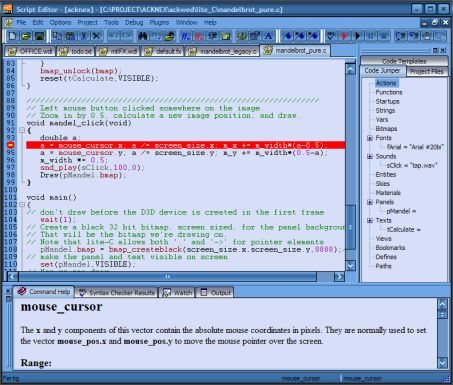
SED - lite-C script editor and debugger
If you prefer to program in 'real' C++, C#, Delphi or other languages, you can implement Gamestudio's engine into your own programs using the engine SDK. You can even continue to use lite-C as a scripting language; lite-C functions and variables can be called from your program and vice versa.
lite-C FEATURES
|
On-the-fly compiler |
|
Direct access to the Windows API, DirectX 9 and OpenGL functions |
|
Remote control of arbitrary Windows applications |
|
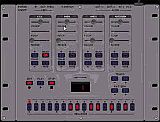
Control of external devices through port I/O functions |
|
Easy, transparent multitasking |
|
Console mode for manipulating variables and objects at runtime |
|
Syntax-highlighting editor, single-step debugger |
|
Expandable through external DLL and COM libraries |
 Learn More... Learn More...
|